Composition:
* Hydrogen (H2): About 89% of the atmosphere by mass.
* Helium (He): About 10% of the atmosphere by mass.
* Trace gases: These include methane (CH4), ammonia (NH3), water vapor (H2O), hydrogen sulfide (H2S), and phosphine (PH3). These gases are responsible for the colorful bands and storms we see.
Structure:
* Layered: The atmosphere is divided into several layers based on temperature and pressure:
* Exosphere: The outermost layer, blending into space.
* Thermosphere: Temperatures increase with altitude due to absorption of solar radiation.
* Stratosphere: Relatively stable, with a temperature inversion.
* Troposphere: The lowest layer, where most of the weather occurs.
* Dynamic: Jupiter's atmosphere is constantly moving, resulting in strong winds, massive storms, and swirling cloud bands.
Key Features:
* Great Red Spot: A massive anticyclonic storm larger than Earth that has been raging for centuries.
* Bands: Alternating light and dark bands of clouds, with lighter zones representing rising air and darker belts representing sinking air.
* Storms: Numerous storms of various sizes and intensities.
* Auroras: Intense displays of light in the polar regions caused by charged particles from the Sun interacting with Jupiter's magnetic field.
Unique Characteristics:
* High Wind Speeds: Winds can reach up to 400 mph (640 km/h) in the upper atmosphere.
* Deep Atmosphere: Jupiter's atmosphere extends far below the visible clouds, possibly as deep as 1,000 kilometers (620 miles).
* Internal Heat Source: Jupiter emits more heat than it receives from the Sun, suggesting an internal heat source from gravitational pressure.
Scientific Significance:
* Planet Formation: Jupiter's atmosphere provides insights into the early solar system and the formation of gas giants.
* Weather and Climate: Studying Jupiter's atmospheric dynamics helps us understand weather patterns on Earth and other planets.
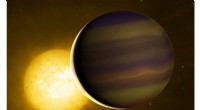
* Exoplanet Research: Jupiter is a reference point for studying the atmospheres of exoplanets.
Overall, Jupiter's atmosphere is a dynamic and fascinating environment that continues to intrigue scientists and inspire awe. It showcases the immense power of nature and the intricate processes at play in the cosmos.