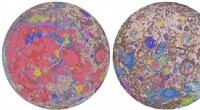
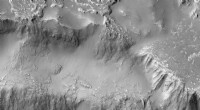
* The Moon is not perfect: He observed craters, mountains, and valleys on the Moon's surface, demonstrating that it wasn't a smooth, perfect sphere as previously believed.
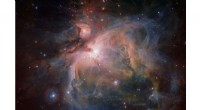
* The Milky Way is composed of stars: Through his telescope, he saw that the Milky Way was not a hazy cloud but a collection of countless stars.
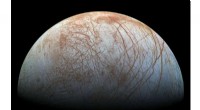
* Jupiter has moons: He discovered four moons orbiting Jupiter (now known as the Galilean moons: Io, Europa, Ganymede, and Callisto). This was the first time celestial bodies were observed orbiting something other than the Earth, further challenging the geocentric model.
* Venus has phases: He observed the phases of Venus, similar to the Moon, which could only be explained if Venus orbited the Sun, not the Earth. This provided strong evidence for the heliocentric model proposed by Nicolaus Copernicus.
* Sunspots exist: He observed dark spots on the Sun's surface, proving that the Sun was not perfect as previously thought.
These observations were revolutionary and contributed significantly to the scientific revolution. They provided compelling evidence for the heliocentric model, challenged the traditional views of the universe, and helped pave the way for modern astronomy.