1. Global Coverage:
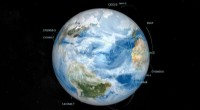
* Satellites orbit the Earth, providing a vantage point to observe large areas of the planet simultaneously. This allows for comprehensive data collection over vast distances, which would be impractical or impossible using ground-based instruments.
2. Remote Sensing:
* Satellites can measure various parameters without needing physical contact with the Earth's surface. They use sensors that detect different types of electromagnetic radiation, such as light, heat, and microwaves.
3. Continuous Monitoring:
* Satellites provide continuous data collection, allowing scientists to track changes over time. This is crucial for understanding long-term trends, like climate change, deforestation, and urban expansion.
4. Diverse Applications:
* Satellites are used in numerous fields, including:
* Earth Observation: Studying weather patterns, sea levels, ice caps, vegetation, and land use changes.
* Environmental Monitoring: Tracking air and water pollution, deforestation, and natural disasters.
* Navigation and Positioning: Providing GPS data for navigation and mapping.
* Communication: Transmitting data and signals for communication networks.
* Astronomy and Space Research: Observing celestial objects and studying the universe.
Specific examples of measurements taken by satellites:
* Temperature: Measuring surface and atmospheric temperatures to study climate change and weather patterns.
* Precipitation: Monitoring rainfall, snowfall, and other forms of precipitation for weather forecasting and flood prediction.
* Wind speed and direction: Observing wind patterns for weather forecasting and understanding atmospheric circulation.
* Ocean currents: Tracking ocean currents to study marine ecosystems and predict oceanographic events.
* Sea level: Measuring sea level rise and its impact on coastal areas.
* Vegetation cover: Monitoring vegetation growth and health for agriculture, forestry, and biodiversity conservation.
* Air quality: Measuring pollutants in the atmosphere to study air pollution and its health effects.
Overall, satellites provide a powerful tool for scientists to gather data about our planet and the universe. They offer unparalleled coverage, remote sensing capabilities, and continuous monitoring, contributing to our understanding of the Earth and its environment.