Planets: Planets like Earth, Mars, and Venus are not luminous bodies themselves, but rather reflect sunlight. This is why we see them shining in the night sky. The intensity of their reflected light depends on their distance from the Sun and their reflectivity (albedo).
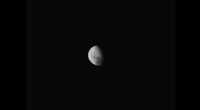
Moons: Moons, like our own Moon, are also non-luminous bodies. They shine by reflecting sunlight, although their appearance and brightness vary depending on their position relative to the Sun and Earth.
Asteroids and Comets: These smaller bodies within our solar system also reflect sunlight, appearing as faint points of light in the sky. Comets, however, can develop a glowing tail due to the interaction of sunlight with their icy composition.
Interstellar Dust: This fine dust scattered throughout the Milky Way galaxy reflects starlight, creating a faint, hazy glow in the night sky. It also absorbs and re-emits light, contributing to the reddish appearance of some nebulae.
Nebulae: While some nebulae emit their own light (emission nebulae), others are illuminated by nearby stars. These are called reflection nebulae, and they reflect the starlight, often showcasing beautiful blues and greens.
Other Galaxies: Galaxies like Andromeda, though distant, are composed of stars, planets, dust, and gas. The light we see from these galaxies is a combination of starlight from billions of individual stars, reflected and scattered by interstellar matter.
Exoplanets: While we cannot directly see most exoplanets due to their small size and distance, some exoplanets pass in front of their host star (transiting). During these transits, we can detect the dimming of the starlight as the exoplanet blocks its light. While not technically reflecting light, this method reveals the presence and properties of exoplanets.
It's important to remember that:
* The color of the reflected light can vary depending on the composition and reflectivity of the object. For example, icy moons tend to reflect a blueish hue, while dusty planets might appear reddish.
* The amount of light reflected also depends on the angle of the incident light and the object's position relative to the observer.
In essence, the universe is full of objects that reflect starlight, making it a mesmerizing and intricate place to explore.