Galaxies are vast collections of stars, gas, dust, and dark matter bound together by gravity. While our Milky Way is familiar, other galaxies exhibit a wide range of characteristics, categorized by their:
1. Morphology:
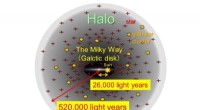
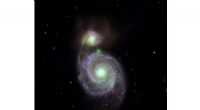
* Spiral Galaxies: These are the most common type, characterized by a central bulge and spiral arms. They are further classified based on arm tightness, with Sa being the tightest and Sc the loosest. The Milky Way is a barred spiral galaxy (SBb).
* Elliptical Galaxies: These are smooth, oval-shaped galaxies, lacking defined structures like spiral arms. They range from nearly spherical (E0) to highly elongated (E7).
* Lenticular Galaxies: These are intermediate between spirals and ellipticals, with a disk but lacking prominent spiral arms. They're designated by the letter "S0".
* Irregular Galaxies: These lack defined structures and have chaotic appearances. They often result from collisions or interactions between other galaxies.
2. Size and Mass:
* Dwarf Galaxies: These are small, faint galaxies with only a few million stars. They can be either spheroidal or irregular.
* Giant Galaxies: These are massive galaxies, sometimes exceeding 100 billion stars. They often host active galactic nuclei (AGNs).
* Galaxy Clusters: These are massive collections of galaxies bound together by gravity. Some clusters can contain thousands of galaxies.
3. Composition:
* Stellar Populations: Different galaxies can have different star populations, with some dominated by young, blue stars and others by older, red stars.
* Gas and Dust Content: The amount of gas and dust in a galaxy affects its star formation rate and its appearance.
* Dark Matter: All galaxies are thought to contain a large amount of dark matter, which doesn't emit light but contributes significantly to their mass and gravity.
4. Activity:
* Active Galactic Nuclei (AGNs): These are the extremely bright centers of some galaxies, powered by supermassive black holes. They can emit radiation across the electromagnetic spectrum.
* Star Formation: Some galaxies have high star formation rates, while others are relatively quiescent. The rate of star formation is influenced by the galaxy's gas content and environment.
5. Interactions and Evolution:
* Galaxy Collisions: Galaxies can collide and merge, forming new galaxies or changing their structure.
* Tidal Interactions: Galaxies can interact gravitationally, influencing each other's shape and evolution.
* Evolutionary Stage: Galaxies evolve over time, changing their structure, composition, and activity.
Understanding these characteristics helps us study the diversity and evolution of galaxies, providing insights into the universe's formation and development.