Here's what you can find in the ionosphere:
1. Ionized Particles:
* Free electrons: These are negatively charged particles that have been stripped from their atoms.
* Ions: These are positively charged particles that have lost one or more electrons.
* Neutral particles: These are atoms or molecules that have not been ionized.
The composition of ions varies depending on the altitude. For example, the lower ionosphere (D region) is dominated by nitrogen and oxygen ions, while the upper ionosphere (F region) contains more hydrogen and helium ions.
2. Auroras:
* The ionosphere is where auroras, also known as the Northern and Southern Lights, occur. These stunning displays of light are caused by charged particles from the sun interacting with the Earth's magnetic field and exciting atoms and molecules in the ionosphere.
3. Radio Waves:
* The ionosphere plays a crucial role in radio communication. It reflects radio waves back to Earth, allowing long-distance communication over the horizon. This is why you can sometimes receive radio broadcasts from stations far away.
4. Spacecraft:
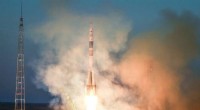
* Many satellites and spacecraft orbit within the ionosphere, where they can be affected by its charged particles. These effects can range from minor disturbances to significant problems with electronic systems.
5. Other Phenomena:
* The ionosphere can also be affected by other phenomena, such as solar flares and geomagnetic storms. These events can cause disruptions to radio communication, GPS signals, and power grids.
In summary, the ionosphere is a dynamic and complex region of Earth's atmosphere with a range of fascinating phenomena that impact our lives in many ways.