Physics:
* Newtonian Mechanics: Understanding gravity, motion, and forces is essential for launching rockets and navigating in space.
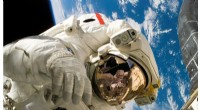
* Thermodynamics: Managing heat transfer in spacecraft and space suits.
* Electromagnetism: Understanding how electromagnetic fields interact with spacecraft and instruments.
Chemistry:
* Materials Science: Developing lightweight, durable materials for spacecraft, engines, and spacesuits.
* Rocket Propulsion: Developing efficient fuels and combustion processes for rockets.
* Life Support Systems: Creating systems to sustain human life in space, including oxygen production and waste management.
Engineering:
* Aerospace Engineering: Designing and building spacecraft, rockets, and launch vehicles.
* Mechanical Engineering: Designing and building the intricate systems within spacecraft, including engines, life support, and communication systems.
* Electrical Engineering: Designing and building spacecraft power systems, communication systems, and guidance and control systems.
Biology & Medicine:
* Astrobiology: Studying the possibility of life beyond Earth.
* Space Medicine: Understanding the effects of space on human health and developing countermeasures.
Computer Science:
* Software Engineering: Developing software to control spacecraft, analyze data, and communicate with Earth.
* Artificial Intelligence: Developing AI systems to help with navigation, decision-making, and scientific research.
Other Areas:
* Astronomy: Understanding the universe and celestial bodies to plan missions and conduct research.
* Geology: Studying planets and their geology to understand their formation and evolution.
* Meteorology: Predicting space weather to ensure the safety of spacecraft and astronauts.
Overall, the science of going into space is a complex and exciting field that is constantly evolving. It involves the expertise of many different disciplines and pushes the boundaries of human knowledge and ingenuity.