1. Light Distortion and Blurring:
* Atmospheric Turbulence: The atmosphere is constantly in motion, causing air currents and temperature variations. This turbulence bends and scatters light from celestial objects, creating distortions and blurring in images.
* Light Absorption and Scattering: The atmosphere absorbs certain wavelengths of light, particularly ultraviolet and infrared, while scattering others. This limits the types of light that can reach the telescope and obscures observations in these wavelengths.
2. Reduced Image Quality:
* Atmospheric Seeing: This term refers to the degree of blurring caused by atmospheric turbulence. It is a major factor limiting the resolution of ground-based telescopes. Hubble, being in space, avoids this entirely.
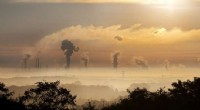
* Light Pollution: Artificial light from cities and other sources can interfere with astronomical observations, especially for faint objects. Hubble is above this light pollution, allowing it to see fainter objects.
3. Limited Observational Capabilities:
* Wavelength Range: The atmosphere restricts observations to visible light and some near-infrared wavelengths. Hubble, operating in the vacuum of space, can observe in ultraviolet, visible, and near-infrared light.
* Observing Time: Ground-based telescopes are limited by weather conditions, requiring clear skies for observations. Hubble is unaffected by weather and can observe continuously.
4. Protection and Maintenance:
* Space Debris: Hubble orbits in a region with significant space debris, which can pose a collision risk. The telescope's design includes features to mitigate this risk.
* Micrometeoroids: Small particles of space dust can damage the telescope's optics. Hubble is designed with robust components to withstand these impacts.
In summary:
While the Earth's atmosphere presents challenges for ground-based telescopes, it also offers protection and allows for various research opportunities. Hubble's location in space allows it to avoid these atmospheric limitations, enabling it to capture incredibly sharp and detailed images of the universe, opening up new possibilities for astronomical research.