Exploration and Observation:
* Mapping: Creating detailed maps of planets, moons, asteroids, or other celestial bodies.
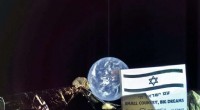
* Imaging: Taking photographs and videos of distant objects.
* Atmospheric analysis: Studying the composition and structure of atmospheres.
* Surface analysis: Examining the composition, geology, and physical properties of surfaces.
* Magnetic field measurements: Studying the magnetic fields of planets and other celestial objects.
* Gravity measurements: Determining the gravitational pull of celestial bodies.
Scientific Investigation:
* Studying the origin and evolution of the solar system: Investigating the formation and evolution of planets, moons, and other celestial objects.
* Searching for signs of life: Looking for evidence of past or present life on other planets or moons.
* Understanding the Sun and its effects on the solar system: Studying solar flares, coronal mass ejections, and other solar activity.
* Studying the interstellar medium: Investigating the matter and radiation that exists between stars.
Beyond Science:
* Testing new technologies: Space probes are used to test and develop new technologies, like propulsion systems or communication systems.
* Reaching new destinations: Some probes are designed to explore regions of space never visited before, pushing the boundaries of human knowledge.
In summary, space probes act as our eyes and ears in the vastness of space, providing us with invaluable information that helps us understand the universe better. They contribute to our knowledge of the solar system, the galaxy, and the universe as a whole, enriching our understanding of our place within the cosmos.