Common Features:
* Aerodynamic Shape: Many spacecraft designed for atmospheric flight, like rockets and space shuttles, have streamlined shapes to reduce drag and friction.
* Solar Panels: These flat, rectangular panels convert sunlight into electricity to power the spacecraft.
* Antenna: These protruding structures communicate with Earth or other spacecraft.
* Engines: Propellant tanks and engines provide thrust for maneuvering and orbital changes.
Types of Spacecraft and Their Looks:
* Rockets: Tall, cylindrical with a pointed nose cone and booster rockets strapped to the sides.
* Space Shuttles: Winged spacecraft designed for atmospheric flight and reusable landings.
* Satellites: Vary greatly in size and shape, from cube-shaped to dish-shaped.
* Space Probes: Typically have scientific instruments protruding from a central body.
* Space Stations: Large, modular structures designed for long-term human habitation.
* Space Telescopes: Often resemble giant, cylindrical instruments with large mirrors or lenses.
Here are some examples:
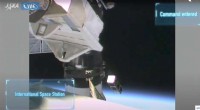
* The International Space Station (ISS): Looks like a huge, modular structure with many different sections connected together.
* The Hubble Space Telescope: Looks like a large, cylindrical instrument with a giant mirror.
* The Curiosity Rover (Mars): Looks like a six-wheeled car with a long arm holding scientific instruments.
* The SpaceX Starship: Looks like a tall, cylindrical spacecraft with a wide base and a pointed nose cone.
It's worth noting that spacecraft can change drastically over time, as technology evolves.
Want to see some cool spacecraft? Try searching online for "spacecraft images" or "spacecraft art."