* Red Giant Phase: This phase occurs when a star has exhausted the hydrogen fuel in its core. The core contracts under gravity, causing the outer layers to expand and cool, leading to the red giant appearance.
* Helium Fusion: The core begins to fuse helium into carbon and oxygen. This process releases energy, but it's not as efficient as hydrogen fusion, so the star becomes unstable and loses mass through stellar winds.
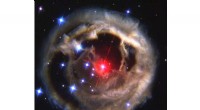
* Planetary Nebula: Eventually, the outer layers of the star are ejected into space, forming a beautiful, expanding cloud called a planetary nebula (though it has nothing to do with planets).
* White Dwarf: The remaining core, now mostly composed of carbon and oxygen, is extremely dense and hot. It has exhausted all nuclear fuel and no longer produces energy, slowly radiating its heat away over billions of years, becoming a white dwarf.
Key Points:
* Not All Stars: Only medium-sized stars, like our Sun, end up as white dwarfs. More massive stars go through different processes and ultimately become neutron stars or black holes.
* Density: White dwarfs are incredibly dense. A teaspoonful of white dwarf material would weigh several tons!
* Cooling: White dwarfs are the remnants of stars. They are constantly cooling down and will eventually become black dwarfs, but this process takes trillions of years, longer than the age of the universe.