* Mercury: Grayish-brown with a slightly reddish hue. It's essentially a rocky, cratered world with no significant atmosphere.
* Venus: A pale yellow-white. Its dense, thick atmosphere reflects sunlight.
* Earth: Primarily blue, but with green, brown, and white regions depending on oceans, land masses, and clouds.
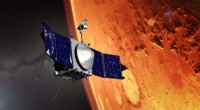
* Mars: Reddish-brown, due to iron oxide in its soil.
* Jupiter: A banded, swirling mix of oranges, browns, and whites. Its atmosphere is primarily hydrogen and helium, with swirling clouds of different compositions.
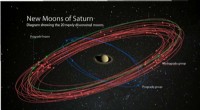
* Saturn: Pale yellow, with subtle hints of brown and red. It's known for its prominent rings, which appear slightly reddish in color.
* Uranus: Pale blue-green, likely due to the presence of methane in its atmosphere.
* Neptune: Deep blue, also attributed to methane in its atmosphere.
It's important to remember that these are just approximations. The planets can appear slightly different depending on factors like the angle of light, the distance from the sun, and the viewer's perspective.