* The Exosphere: The exosphere is the outermost layer of the atmosphere, extending from about 700 km (435 miles) to 10,000 km (6,214 miles) above Earth. It's incredibly thin, with very few gas molecules.
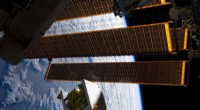
* Space Station Altitude: The International Space Station (ISS), for example, orbits at an altitude of around 400 km (249 miles). Other space stations have orbited at similar altitudes.
Therefore, space stations orbit within the thermosphere, which lies directly below the exosphere.
Why is this important? The altitude of a space station is crucial for a few reasons:
* Atmospheric Drag: Even in the thermosphere, there's still a tiny amount of atmospheric drag. This causes a slight slowdown over time, which is why space stations require occasional boosts to maintain their orbit.
* Radiation: The thermosphere is where the Earth's magnetic field deflects most of the harmful radiation from the Sun.
* Communications: The thermosphere is a key region for radio waves and satellite communication.
So, while space stations are definitely in space, they're technically orbiting within the thermosphere, not the exosphere!