1. Age and Expansion of the Universe:
* Hubble's observations of distant Cepheid variable stars allowed astronomers to refine the age of the universe to approximately 13.8 billion years.
* It also confirmed and refined the rate at which the universe is expanding (Hubble Constant), further solidifying the Big Bang theory.
2. Formation and Evolution of Galaxies:
* Hubble has provided stunning images of distant galaxies, revealing their structure, composition, and evolution.
* It has helped understand how galaxies form, interact, and evolve over time, shedding light on the processes that shape the universe.
* Hubble's observations of galactic collisions, starburst galaxies, and early galaxies have provided crucial insights into galaxy evolution.
3. Properties of Stars and Planets:
* Hubble has observed the birth and death of stars, providing valuable data on stellar evolution and life cycles.
* It has captured images of protoplanetary disks around young stars, revealing the early stages of planet formation.
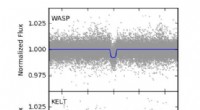
* Hubble has also contributed to the discovery of exoplanets, planets orbiting stars outside our solar system, by observing the slight dimming of starlight as a planet passes in front of its host star.
4. Black Holes and Active Galactic Nuclei:
* Hubble has captured breathtaking images of black holes, including the supermassive black hole at the center of our Milky Way galaxy.
* It has provided detailed observations of active galactic nuclei (AGN), powered by supermassive black holes, revealing their structure and energy output.
5. Dark Matter and Dark Energy:
* Hubble's observations of distant supernovae have contributed to the understanding of dark energy, the mysterious force causing the accelerated expansion of the universe.
* It has also provided evidence for the existence of dark matter, a mysterious substance that makes up the majority of the universe's mass but does not interact with light.
6. Cosmic Microwave Background Radiation:
* Hubble has provided valuable data on the cosmic microwave background radiation, a faint afterglow of the Big Bang.
* These observations have helped refine our understanding of the early universe and the conditions that existed shortly after the Big Bang.
7. Unprecedented Images and Data:
* Hubble's unparalleled optical resolution and sensitivity have produced stunning images and vast amounts of data, inspiring generations of scientists and the public alike.
* These images have allowed us to witness the universe in unprecedented detail, fueling our curiosity and igniting our imagination.
The Hubble Space Telescope has been an extraordinary tool, leading to countless discoveries and furthering our understanding of the universe in ways unimaginable before its launch. It continues to inspire and educate us about our place in the cosmos.