Here's why:
* Fusion requires energy: Each step in the fusion process requires energy to overcome the electrostatic repulsion between positively charged nuclei.
* Iron is the most stable element: Iron has the highest binding energy per nucleon, meaning it's the most stable element in the universe.
* Fusion beyond iron consumes energy: Fusing elements beyond iron *consumes* energy instead of releasing it. This means the process can't continue within a star's core.
So, how do we get heavier elements?
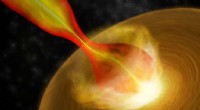
Heavier elements are created in supernova explosions, which are the deaths of much more massive stars. When a massive star runs out of fuel, it collapses under its own gravity, triggering a cataclysmic explosion.
During this explosion:
1. Neutron capture: The extreme conditions of a supernova create a flux of neutrons, which bombard existing nuclei. This process, called neutron capture, allows the creation of heavier elements.
2. Rapid neutron capture (r-process): The rapid addition of neutrons during a supernova explosion leads to the formation of very heavy elements.
In summary:
* Low-mass stars like our Sun produce elements up to iron through fusion.
* Heavy elements beyond iron are primarily created in the explosive death of massive stars (supernovae) through neutron capture.