1. Main Sequence: The Sun spends the majority of its life in the main sequence, fusing hydrogen into helium in its core. This process generates energy, creating the light and heat we experience.
2. Red Giant: As the Sun runs out of hydrogen fuel, it begins to fuse helium into carbon in a shell around its core. This causes the Sun to expand dramatically, becoming a red giant.
3. Helium Flash: The core of the Sun becomes incredibly dense and hot, causing helium to ignite in a powerful burst called the helium flash.
4. Horizontal Branch: After the helium flash, the Sun enters the horizontal branch phase, fusing helium in its core.
5. Asymptotic Giant Branch (AGB): Eventually, the Sun exhausts its helium fuel and begins fusing carbon into heavier elements in a shell around the core. This further expands the Sun, making it an asymptotic giant branch (AGB) star.
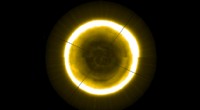
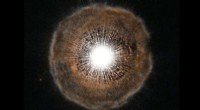
6. Planetary Nebula: During the AGB phase, the Sun sheds its outer layers, forming a beautiful and expanding shell of gas known as a planetary nebula.
7. White Dwarf: The remaining core of the Sun, now primarily composed of carbon and oxygen, is a very dense and hot object called a white dwarf. This is the final stage in the Sun's life.
Important Note: The Sun is not massive enough to become a supernova or a neutron star. These events occur in stars much larger than our Sun.