1. Location:
* Above Earth's atmosphere: This is crucial. Earth's atmosphere distorts and scatters light, blurring images. Hubble's orbit above the atmosphere provides crystal-clear views.
* Stable platform: Orbiting above the atmosphere eliminates the blurring caused by wind and turbulence, leading to sharper and more detailed images.
2. Advanced Technology:
* Large primary mirror: Hubble's 2.4-meter (7.9-foot) mirror collects a lot of light, allowing it to see very faint and distant objects.
* Sophisticated instruments: Hubble carries various instruments for observing different wavelengths of light, including visible light, infrared, and ultraviolet.
* Regular upgrades: Through multiple servicing missions, Hubble has received upgrades and repairs, including new instruments and improved technology, ensuring its ongoing capabilities.
3. Scientific Impact:
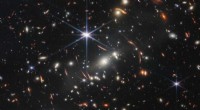
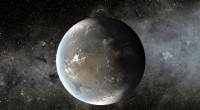
* Unveiling the Universe: Hubble has captured iconic images of nebulae, galaxies, and distant planets, providing unprecedented views of the cosmos and revealing previously unknown phenomena.
* Precision measurements: Hubble's observations have allowed astronomers to precisely measure the age and expansion rate of the universe, confirm the existence of dark energy, and study the life cycles of stars.
* Pushing the boundaries of astronomy: Hubble has led to countless scientific discoveries and inspired generations of astronomers and scientists.
In summary, the Hubble Space Telescope's success stems from its unique location, advanced technology, and the extraordinary scientific achievements it has made possible. It has fundamentally transformed our understanding of the universe and continues to inspire awe and wonder in people around the world.