Low-mass stars (like our Sun)
* Become a white dwarf: After exhausting their hydrogen fuel, low-mass stars expand into red giants. They then shed their outer layers, leaving behind a dense, hot core called a white dwarf. White dwarfs are incredibly dense, packing the mass of our Sun into a sphere roughly the size of Earth.
High-mass stars
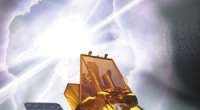
* Become a neutron star or a black hole: High-mass stars undergo a much more dramatic death. They explode in a spectacular event called a supernova.
* Neutron star: If the star's core is between about 1.4 and 3 times the mass of our Sun, the supernova explosion leaves behind a neutron star. These stars are incredibly dense, squeezing the mass of our Sun into a sphere only about 12 miles across.
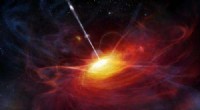
* Black hole: If the star's core is greater than 3 times the mass of our Sun, the supernova explosion creates a black hole. Black holes are regions of spacetime where gravity is so strong that nothing, not even light, can escape.
In summary:
* Low-mass stars become white dwarfs.
* High-mass stars become either neutron stars or black holes.