Moons
* Nature: Natural satellites that orbit planets.
* Light: Reflect light from their host star (usually a sun).
* Composition: Rocky or icy bodies, often with craters and mountains.
* Temperature: Very cold, as they don't generate their own heat.
* Size: Much smaller than stars.
* Example: Our Moon, Jupiter's moon Europa, Saturn's moon Titan.
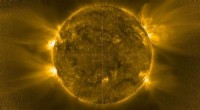
Stars
* Nature: Giant balls of hot, glowing gas, primarily hydrogen and helium.
* Light: Generate their own light through nuclear fusion.
* Composition: Mostly hydrogen and helium, with small amounts of other elements.
* Temperature: Incredibly hot, with surface temperatures ranging from a few thousand to tens of thousands of degrees Celsius.
* Size: Vary greatly in size, from small red dwarfs to supergiant stars.
* Example: Our Sun, Sirius, Betelgeuse.
In a nutshell:
* Moons are like smaller, rocky/icy companions to planets.
* Stars are massive, burning balls of gas that produce their own light and heat.
Let me know if you'd like more details about any of these aspects!