1. Gravity's Pull: A star begins its life as a giant cloud of gas and dust called a nebula. Gravity pulls this material together, causing it to heat up and compress.
2. Fusion Ignition: As the core of the collapsing cloud gets incredibly hot and dense, the pressure becomes immense. At a certain point, the temperature reaches millions of degrees Celsius. This intense heat allows the nuclei of hydrogen atoms to overcome their electrostatic repulsion and fuse together.
3. Fusion Process: When hydrogen nuclei fuse, they form helium, releasing a tremendous amount of energy in the process. This energy is what makes stars shine. The fusion reaction is like a giant, continuous explosion.
4. Energy Release: The energy released in fusion travels outwards from the core, pushing against the immense gravity trying to crush the star. This outward pressure creates a stable equilibrium, balancing the inward pull of gravity.
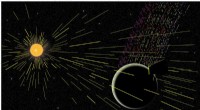
5. Light and Heat: The energy from fusion manifests as light and heat, which we observe as the star's brilliance. The color of a star depends on its temperature. Hotter stars emit more blue light, while cooler stars appear reddish.
In summary:
Stars are giant nuclear fusion reactors. The intense pressure and heat in their cores allow hydrogen atoms to fuse into helium, releasing immense energy that powers the star's light and heat. This process is the fundamental source of light and energy for stars throughout the universe.