1. Magnification and Resolution:
* Magnification: Telescopes increase the apparent size of distant objects, allowing us to see details that would be invisible to the naked eye. This is especially important for studying planetary features, star clusters, and galaxies.
* Resolution: Telescopes can distinguish between closely spaced objects, revealing fine details like craters on the Moon, rings around Saturn, and the individual stars within a nebula.
2. Light Gathering Power:
* Telescopes collect more light from distant objects than our eyes can, making fainter objects visible. This allows us to study distant galaxies, faint stars, and even the faint glow of distant nebulae.
3. Spectral Analysis:
* Telescopes are equipped with spectrometers that split light into its component colors. This allows astronomers to determine the composition, temperature, and motion of celestial objects.
* By analyzing the spectral lines in the light from stars, we can determine their chemical composition, temperature, and radial velocity (how fast they are moving towards or away from us).
4. Imaging and Observation:
* Imaging: Telescopes can capture images of celestial objects, providing detailed visual information about their appearance, shape, and structure.
* Observation: Telescopes enable astronomers to monitor changes in the sky, such as eclipses, supernovae, and asteroid movements, providing insights into the dynamics of the universe.
5. Different Wavelengths:
* Optical Telescopes: These are the most common type, capturing visible light.
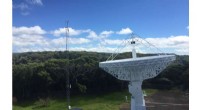
* Radio Telescopes: They detect radio waves emitted by celestial objects, allowing us to study phenomena invisible to the human eye, such as pulsars and active galaxies.
* Infrared Telescopes: They observe infrared radiation, which penetrates dust clouds and reveals the formation of stars and planets.
* Ultraviolet, X-ray, and Gamma-ray Telescopes: These telescopes detect high-energy radiation, revealing processes like black hole activity and the birth of stars.
In summary, telescopes provide astronomers with essential tools for:
* Observing and studying distant objects
* Gathering light and resolving fine details
* Analyzing the composition and properties of celestial bodies
* Monitoring changes in the sky
* Observing different wavelengths of light, revealing a wider range of celestial phenomena.
Telescopes have revolutionized our understanding of the universe, allowing us to explore the cosmos and unravel its mysteries.