Common Remnants:
* Supernova Remnant (SNR): This is the expanding shell of gas and dust ejected from the exploding star. It can be incredibly bright and hot, emitting radiation across the electromagnetic spectrum. Famous examples include the Crab Nebula and the Veil Nebula.
* Neutron Star: For stars that are not too massive, the core collapses into a tiny, incredibly dense object called a neutron star. These stars are only a few miles across but contain the mass of our Sun. They spin rapidly and have incredibly strong magnetic fields, creating pulsars that emit radio waves.
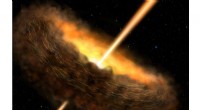
* Black Hole: If the original star was extremely massive (more than 20 times the mass of our Sun), the core collapses completely, forming a black hole. This is a region of spacetime where gravity is so strong that nothing, not even light, can escape.
Less Common Remnants:
* Magnetar: Some neutron stars have extremely powerful magnetic fields, thousands of times stronger than a typical neutron star. These are called magnetars and are responsible for powerful bursts of X-rays and gamma rays.
* Supernova Remnant with a Pulsar: Some supernova remnants contain a pulsar at their center, which is a rapidly rotating neutron star emitting a beam of radiation. The pulsar's energy can interact with the surrounding gas and dust, creating intricate structures within the supernova remnant.
Interesting Facts:
* Supernova remnants are important for the evolution of galaxies, enriching the interstellar medium with heavy elements that will eventually form new stars and planets.
* Supernova explosions can trigger the formation of new stars in nearby molecular clouds.
* The remnants of supernovae can be observed for thousands of years after the explosion.
In short, the explosion of a supernova leaves behind a rich and diverse collection of objects that are fascinating to study and provide valuable insights into the life and death of stars.