1. Short-period comets:
* These have orbital periods of less than 200 years.
* They originate from the Kuiper Belt, a region beyond Neptune filled with icy bodies.
* Examples include Halley's Comet (76 years) and Comet Encke (3.3 years).
2. Long-period comets:
* These have orbital periods of more than 200 years, and some can even take thousands of years to complete a single orbit.
* They originate from the Oort Cloud, a vast spherical region much further out than the Kuiper Belt.
* These comets are typically less active and dimmer than short-period comets.
Further Classification:
Comets can also be classified based on their physical characteristics, such as:
* Nuclear size and shape: This can vary significantly from a few kilometers to tens of kilometers.
* Composition: Different comets exhibit varying proportions of ice, dust, and gases.
* Activity: Some comets are very active with bright tails, while others are fainter and less active.
Newly discovered comets:
* New comets are often classified as "C/year of discovery", for example, C/2020 F3 (NEOWISE).
* This classification indicates a comet with a long period or unknown orbit.
* Once their orbits are determined, they may be reclassified as a short-period comet with a "P/year of discovery" designation, for example, P/2020 F3 (NEOWISE).
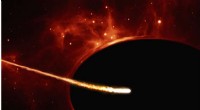
In addition to these classifications, there are also special categories for comets that exhibit unique features, such as split comets and sun-grazing comets.
By understanding these classifications, we can better understand the origins, evolution, and behavior of these celestial visitors.