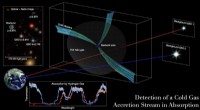
The observational approach to cosmology is built on the foundation of carefully collecting and analyzing data from the universe. Here are some key facts about this approach:
1. Key Tools and Techniques:
* Telescopes: Optical, radio, X-ray, infrared, and other types of telescopes are used to observe distant objects and gather information about their properties.
* Spectroscopy: Analyzing the light from celestial objects reveals their composition, temperature, speed, and other properties.
* Satellite Missions: Space-based telescopes like Hubble and the James Webb Space Telescope provide clearer images and data than ground-based telescopes.
* Computer Simulations: Powerful computers are used to model the evolution of the universe based on observed data and theoretical models.
2. Major Observational Discoveries:
* Expansion of the Universe: Edwin Hubble's observations of distant galaxies revealed that the universe is expanding.
* Cosmic Microwave Background Radiation (CMB): This faint afterglow of the Big Bang provides crucial information about the early universe.
* Dark Matter and Dark Energy: Observations of galaxy rotation curves and distant supernovae revealed that the majority of the universe's matter and energy are invisible and unknown.
* Large-Scale Structure of the Universe: Observations of galaxies and galaxy clusters reveal the large-scale structure of the universe, which is remarkably homogeneous and isotropic.
3. Key Questions Being Addressed:
* The Age of the Universe: Observations of the CMB and distant supernovae provide estimates for the age of the universe (currently estimated at 13.8 billion years).
* The Nature of Dark Matter and Dark Energy: Understanding the nature of these mysterious components is crucial to understanding the evolution of the universe.
* The Origin of Cosmic Structures: How did galaxies, clusters, and other large-scale structures form from the initial homogeneous state of the early universe?
* The Future of the Universe: Will the universe continue to expand forever, or will it eventually collapse in a "Big Crunch"?
4. Strengths and Limitations:
* Strengths: The observational approach provides direct evidence about the universe, allowing us to study its properties and evolution.
* Limitations: We can only observe a limited portion of the universe, and some phenomena are very difficult to study directly, like dark matter. Our understanding is limited by the capabilities of our instruments and theoretical models.
5. Importance:
The observational approach is essential for understanding the universe and its history. It provides a foundation for developing and testing theoretical models, leading to a deeper understanding of the fundamental laws of physics and the nature of reality itself.
In conclusion: The observational approach to cosmology relies on carefully collected and analyzed data from the universe, allowing us to explore its vastness and unravel its mysteries. Through continuous observation and research, we gain valuable insights into the universe's history, its composition, and its ultimate fate.