Weakly Interacting Massive Particles (WIMPs):
* The most popular candidate: WIMPs are hypothetical particles that interact very weakly with ordinary matter. They are massive, which explains their gravitational pull, and interact only via weak forces, making them difficult to detect.
* Examples: Supersymmetric particles like neutralinos, sterile neutrinos.
Axions:
* Light, weakly interacting particles: Axions are hypothetical particles predicted by a theory that explains the strong force.
* Advantages: Could explain the observed abundance of dark matter and interact with photons, which could lead to detectable signals.
Primordial Black Holes:
* Black holes formed shortly after the Big Bang: These could be much smaller than stellar black holes, and their gravitational influence could be consistent with dark matter observations.
* Challenges: Need to be formed in the right abundance to account for all the dark matter.
Other Possibilities:
* Sterile Neutrinos: These are hypothetical particles that do not interact with the weak force as much as regular neutrinos.
* Light Dark Matter: This refers to particles much lighter than WIMPs, possibly even lighter than the lightest atom.
* Modified Gravity: Instead of new particles, some theories propose that gravity works differently at large scales, causing the observed effects attributed to dark matter.
Current Research:
Scientists are using a variety of methods to search for dark matter, including:
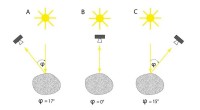
* Direct detection experiments: These look for interactions of dark matter particles with ordinary matter.
* Indirect detection experiments: These look for signals from the annihilation or decay of dark matter particles.
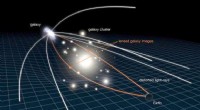
* Observations of galaxy rotation curves and gravitational lensing: These can help constrain the distribution and properties of dark matter.
The Nature of Dark Matter Remains a Mystery:
Although there are promising candidates, the nature of dark matter remains unknown. Ongoing research and new experiments are crucial to unraveling this mystery and providing a complete understanding of the universe.