Here's a breakdown of the key aspects:
* Gravity: The primary force driving orbital motion is gravity. The object being orbited (like the Sun or a planet) exerts a gravitational pull on the orbiting object, causing it to curve in its path rather than traveling in a straight line.
* Curved Path: Orbits are not circular, but rather elliptical (oval-shaped). They have a point of closest approach called the perihelion and a point of farthest distance called the aphelion.
* Orbital Velocity: The orbiting object must maintain a specific speed (orbital velocity) to stay in orbit. If it moves too slowly, gravity will pull it in; if it moves too fast, it will escape the gravitational pull.
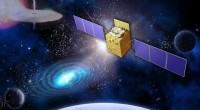
* Examples: Planets orbiting the Sun, moons orbiting planets, satellites orbiting Earth, comets orbiting the Sun.
In simpler terms, you can think of an orbit as a balance between the object's forward motion and the pull of gravity.