* Planets do not have their own internal energy source: Unlike stars, which generate their own light and heat through nuclear fusion, planets are much smaller and cooler. They don't have the mass or internal pressure to create their own light.
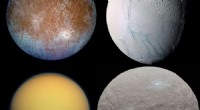
* They reflect light: Planets are visible because they reflect the light from their host star. Think of a mirror reflecting sunlight, except the planet is a much less efficient reflector.
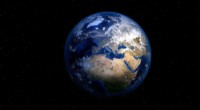
Example: The Earth is visible from space because it reflects sunlight. That's why we see different phases of the Moon – it's reflecting varying amounts of sunlight as it orbits the Earth.
However, there are some exceptions:
* Gas giants like Jupiter and Saturn: While they don't shine with their own light, they do emit a small amount of heat due to internal processes. This heat can be detected by infrared telescopes.
* Some planets in other solar systems: There's a rare type of planet called a "brown dwarf" which is much larger than a planet but smaller than a star. These objects are sometimes considered failed stars. They can emit a faint amount of their own light due to internal processes.
So, while planets don't shine with their own light like stars, they are still fascinating objects to observe and study.