Here's a more accurate breakdown:
* Star Map: An astrolabe does have a star map engraved on its plate, but it's not a simple map. It's a projection of the celestial sphere, showing the positions of stars at specific times and locations.
* Metal Plate: The astrolabe is indeed made of metal, usually brass or bronze, for durability and precision.
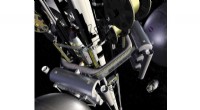
* Instrument: It's much more than just a map. The astrolabe has various moving parts, including a rete (the star map), a rule, and an alidade (a sighting device), which allow for calculations of:
* Time: Determining the time of day and night.
* Latitude: Finding the observer's position on Earth.
* Celestial Positions: Tracking the movement of the sun, moon, and stars.
* Navigation: Guiding sailors and travelers.
So, while an astrolabe includes a star map, its true power lies in its mechanical design and its ability to perform complex astronomical calculations.