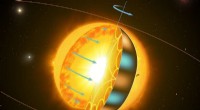
1. Solar Wind: The sun constantly emits a stream of charged particles, primarily protons and electrons, known as the solar wind.
2. Earth's Magnetic Field: Our planet has a magnetic field that acts like a shield, protecting us from the harmful effects of the solar wind.
3. Interaction: When the solar wind encounters Earth's magnetic field, it gets deflected around the planet. However, some particles are trapped in the field lines and follow them towards the poles.
4. Entering the Atmosphere: These charged particles, mainly electrons, spiral down the magnetic field lines and enter the Earth's atmosphere at high speeds.
5. Collision and Excitation: The particles collide with atoms and molecules in the atmosphere, primarily oxygen and nitrogen. This collision excites the atoms, causing them to gain energy.
6. Light Emission: When the excited atoms return to their ground state, they release the extra energy as light. Different gases emit different colors:
* Oxygen: Green and red light
* Nitrogen: Blue and purple light
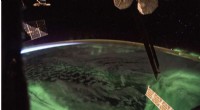
7. Aurora Borealis: The light emitted by the excited atoms creates the beautiful, dancing curtains of light we see as the Aurora Borealis. This phenomenon is most prominent near the Earth's magnetic poles, hence why they are referred to as the "Northern Lights" (Aurora Borealis) and "Southern Lights" (Aurora Australis).
Factors Affecting Aurora Activity:
* Solar Activity: The intensity and frequency of auroras are influenced by the sun's activity, which varies in cycles. Increased solar activity, like solar flares and coronal mass ejections, can lead to stronger and more frequent auroras.
* Geomagnetic Storms: These disturbances in Earth's magnetic field can also enhance aurora activity.
* Seasonality: While auroras can be seen year-round, they are more common and intense during the winter months when the nights are longer and darker.
* Latitude: The auroras are most visible near the poles but can sometimes be seen at lower latitudes during periods of high solar activity.
The beauty of the Aurora Borealis lies in its unpredictable nature, offering a spectacular display of light and color, reminding us of the constant interplay between Earth and the sun.