1. Evidence of Past Water:
* Mars shows strong evidence of past liquid water, including dried-up riverbeds, deltas, and mineral deposits that could only form in the presence of water. This suggests Mars may have once been a much warmer and wetter planet, possibly even habitable.
* While there's no liquid water on the surface today, evidence suggests it may exist in the form of ice beneath the surface and even in small amounts in the atmosphere.
2. The "Red Planet" Appearance:
* Mars' characteristic red color is due to the presence of iron oxide (rust) in its soil and rocks. This gives it its distinctive reddish-brown appearance.
3. Thin Atmosphere and Low Gravity:
* Mars has a very thin atmosphere, about 100 times thinner than Earth's. This results in weak atmospheric pressure and extreme temperature variations.
* The planet's gravity is also much weaker than Earth's, roughly 38% of Earth's gravity. This makes jumping and running much easier on Mars.
4. Two Moons: Phobos and Deimos:
* Mars has two small, irregularly shaped moons: Phobos and Deimos. These moons are thought to be captured asteroids.
* Phobos is particularly interesting as it is gradually spiraling closer to Mars and may eventually break apart or crash into the planet.
5. Olympus Mons: The Largest Volcano in the Solar System:
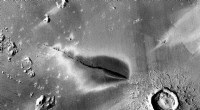
* Mars is home to Olympus Mons, the largest volcano in the solar system. It's a massive shield volcano that rises 21.9 kilometers (13.6 miles) above the surrounding plains.
* Olympus Mons is so large that its summit is above the atmospheric haze, making it visible from the surface.
6. Valles Marineris: The Largest Canyon in the Solar System:
* Mars also boasts Valles Marineris, the largest canyon in the solar system. It is over 4,000 kilometers (2,500 miles) long, up to 200 kilometers (124 miles) wide, and 7 kilometers (4.3 miles) deep.
* In comparison, the Grand Canyon is only 446 kilometers (277 miles) long.
7. Potential for Past or Present Life:
* Mars has been a focus of intense scientific interest due to the possibility of past or present life.
* The evidence of past water, the presence of methane in the atmosphere (which could be a sign of microbial life), and other factors have fueled speculation about the potential for life on Mars.
8. Active Geological Processes:
* While Mars is a cold and dry planet today, it shows evidence of past and possibly present geological activity.
* The planet experiences dust storms, has active volcanoes, and may have underground water movement.
These are just some of the unique aspects of Mars. It remains a fascinating target for scientific exploration, and the mysteries of this "Red Planet" continue to intrigue us.