1. Orbital Motion:
* Planets around stars: Each planet orbits its star in an elliptical path, driven by gravitational force.
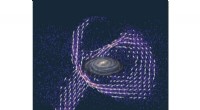
* Stars around galactic centers: Stars within a galaxy revolve around the galactic center due to the collective gravitational pull of all stars within the galaxy.
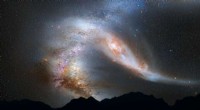
* Galaxies around each other: Galaxies can be bound together in groups or clusters, orbiting each other under mutual gravitational influence.
2. Proper Motion:
* This refers to the angular movement of stars across the sky, as observed from Earth over long periods. This is distinct from the apparent motion due to Earth's rotation.
3. Radial Velocity:
* This refers to the movement of a celestial object directly towards or away from Earth. This is measured by observing the Doppler shift of light emitted by the object.
4. Galactic Rotation:
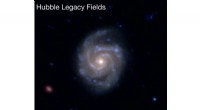
* Our own Milky Way galaxy rotates, with stars orbiting the galactic center in a spiral pattern.
5. Cosmic Expansion:
* On the largest scale, the universe is expanding, causing galaxies to move further apart. This is not the motion of galaxies themselves, but rather the expansion of space itself.
Examples of Real Motion:
* Earth's revolution around the Sun: This causes the seasons.
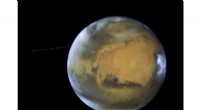
* Mars's orbital motion: This results in its retrograde motion, making it appear to move backwards in the sky.
* The motion of a supernova remnant: The expansion of the debris from a star that exploded.
* The movement of stars within a globular cluster: These stars are gravitationally bound and orbit the center of the cluster.
Significance:
Understanding real motion is crucial in astronomy:
* Determining distances: Observing proper motion and radial velocity helps astronomers estimate distances to stars and galaxies.
* Understanding galaxy evolution: Studying the motion of stars and gas within galaxies provides insights into their formation and evolution.
* Cosmology: The expansion of the universe is a cornerstone of modern cosmology and helps us understand the age and evolution of the universe.
In summary, real motion in astronomy encompasses the actual physical movement of celestial objects in space, which is distinct from apparent motion caused by Earth's movement. It is a key concept in understanding the structure, evolution, and dynamics of the universe.