1. Statistics and Mathematical Probability: The universe is vast and contains billions of galaxies and trillions of stars. Many scientists argue that it is statistically improbable that Earth is the only planet that supports life.
- The Drake Equation: Developed by astronomer Frank Drake, the Drake equation attempts to estimate the number of possible civilizations in the Milky Way galaxy. While uncertain due to many unknown factors, even low probability estimates provide a significant prospect of extraterrestrial civilizations existing.
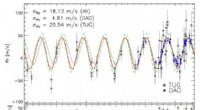
2. Discovery of Exoplanets: The confirmed detection of exoplanets — planets outside our solar system — has increased scientific interest in potential habitability beyond Earth. Telescopic observations have identified potentially habitable exoplanets within habitable zones, where conditions favor the presence of liquid water.
3. Microbial Life's Resilience: Advances in astrobiology and extremophiles' study have demonstrated life's resilience and ability to thrive in extreme environments, including high temperatures, pressures, and radiation. This adaptability suggests that life may exist in various conditions elsewhere in the universe.
4. Chemical and Structural Similarity: Research in organic chemistry and astrochemistry has revealed the existence of organic molecules — the building blocks of life — in space. The potential for complex molecules to form under proper conditions further suggests the possibility of extraterrestrial life.
5. Search for Biosignatures: Scientists continue to study potential biosignatures, signs of life's presence, on astronomical bodies. Spectrographic analysis of planetary atmospheres can reveal the presence of gases associated with life, such as methane, oxygen, and water vapor.
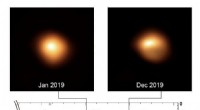
6. Technological Breakthroughs: Advancements in technology, like radio telescopes and space exploration, allow for sensitive observations and direct exploration of other celestial bodies, increasing our chances of finding evidence of extraterrestrial life.
It's essential to note that scientific belief in extraterrestrial life does not suggest definitive proof or widespread contact with aliens. Scientists acknowledge that the possibility of extraterrestrial life's existence does not necessarily mean it is abundant, intelligent, or has visited our planet. Until more evidence emerges, most scientists work on the principles of the scientific method and focus on understanding the potential and conditions that could support life beyond Earth.