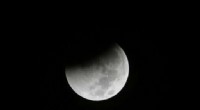
When the sun, moon, and Earth are aligned, their gravitational forces combine, resulting in stronger tidal forces. This alignment occurs during two periods:
1. Spring Tides: When the moon is either new or full, it aligns with the Earth and the sun. In this configuration, the gravitational pull of the sun and moon adds together, amplifying the tidal forces. This leads to increased tidal ranges, with exceptionally high high tides (known as spring high tides) and exceptionally low low tides (known as spring low tides).
2. Neap Tides: When the moon is at its first or third quarter, it forms a right angle with the Earth and the sun. In this position, the gravitational forces of the sun and moon partially cancel each other out, resulting in weaker tidal forces. Consequently, the tidal range decreases, leading to less pronounced high tides (neap high tides) and high low tides (neap low tides).
Therefore, the alignment of the sun, moon, and Earth plays a crucial role in determining the extent of tidal range, with spring tides having the highest tidal range and neap tides having the lowest.