1. Telescopes:
- Optical Telescopes: Collect and focus visible light from celestial objects.
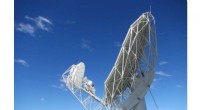
- Radio Telescopes: Detect radio waves emitted by space objects.
- Infrared Telescopes: Capture infrared radiation from astronomical sources.
- Ultraviolet Telescopes: Observe ultraviolet light emitted by celestial bodies.
- X-ray Telescopes: Detect X-rays from high-energy phenomena.
- Gamma-ray Telescopes: Capture gamma rays, often associated with extreme cosmic events.
2. Spacecraft and Probes:
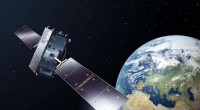
- Satellites: Orbiting platforms equipped with instruments for observations, communications, and data collection.
- Space Telescopes: Telescopes placed in space to avoid atmospheric interference.
- Interplanetary Probes: Robotic spacecraft sent to explore planets, moons, asteroids, and comets.
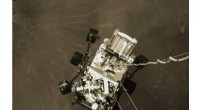
- Rovers: Mobile vehicles used to explore the surface of other celestial bodies.
3. Space Missions:
- Flyby Missions: Spacecraft quickly passes by the target object, collecting data during the encounter.
- Orbiter Missions: Spacecraft orbits the target planet or celestial body for extended observations.
- Lander Missions: Spacecraft lands on the surface of the target for in-situ exploration.
- Sample Return Missions: Spacecraft retrieves samples from another celestial body and returns them to Earth for analysis.
4. Ground-Based Observations:
- Radio Observatories: Use radio telescopes to study cosmic radio waves.
- Optical Observatories: Equipped with specialized telescopes for visible light observations.
- Adaptive Optics: Corrects atmospheric distortions in ground-based observations.
- Interferometry: Combines signals from multiple telescopes to achieve higher resolution.
5. Spectroscopic Techniques:
- Spectroscopy: Analysis of an object's electromagnetic radiation to determine its composition, temperature, and motion.
- Spectral Lines: Unique patterns of absorption or emission lines provide information about the chemical composition of celestial objects.
- Doppler Effect: Measurement of shifts in spectral lines to calculate an object's velocity relative to the observer.
6. Data Analysis and Modeling:
- Image Processing: Techniques to enhance and analyze images captured by telescopes and spacecraft.
- Spectroscopy Analysis: Interpretation of spectral data to understand the physical properties of objects.
- Computational Modeling: Simulations and computer models to reconstruct scenarios, such as planet formation and evolution.
By combining data from various instruments and applying specialized techniques, scientists gather comprehensive information about celestial bodies, cosmic phenomena, and the properties of outer space, allowing us to deepen our understanding of the universe.