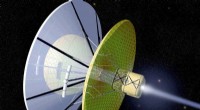
1. Observing Distant Objects: Many celestial objects, such as galaxies, stars, and planets, are located millions of light-years away from Earth. Without the aid of telescopes and other instruments, these objects would be too faint or too small to be observed directly with the naked eye. Telescopes collect and magnify light from these distant sources, allowing astronomers to gather detailed images and data.
2. Collecting Data: Modern astronomy involves collecting vast amounts of data from various regions of the electromagnetic spectrum, including visible light, infrared, ultraviolet, X-rays, and gamma rays. Specialized instruments and detectors are necessary to record this data, which is essential for understanding the physical properties, composition, and behavior of celestial objects.
3. Image Processing: Astronomical images often require extensive processing to enhance their quality and reveal hidden details. Image processing techniques, such as stacking, filtering, and color correction, help astronomers extract valuable information and create stunning visualizations of the universe.
4. Spectroscopy: Spectroscopy plays a crucial role in astronomical research. It involves splitting light into its component wavelengths, allowing astronomers to identify the chemical composition of stars and other objects by analyzing their unique spectral signatures.
5. Radio Astronomy: Radio telescopes detect and analyze radio waves emitted by celestial objects, providing insights into phenomena like star formation, black holes, and the interstellar medium.
6. Space Missions: Spacecraft and telescopes launched into space have allowed astronomers to study objects and regions of the universe that are inaccessible from Earth. Missions like the Hubble Space Telescope, Chandra X-ray Observatory, and the James Webb Space Telescope have provided unprecedented views and discoveries.
7. Data Analysis and Modeling: Astronomy generates massive datasets that require powerful computing resources and sophisticated software for analysis and modeling. These tools help astronomers derive meaningful conclusions and develop theories about the universe.
8. Detecting Exoplanets: The discovery and characterization of exoplanets (planets outside our solar system) heavily rely on advanced technologies such as transit photometry, radial velocity measurements, and microlensing techniques.
9. Adaptive Optics: Adaptive optics systems compensate for distortions caused by Earth's atmosphere, improving the resolution and sharpness of astronomical images.
10. Virtual Observatories: Virtual observatories provide astronomers with online access to vast astronomical databases, allowing them to remotely search, analyze, and visualize data without direct access to telescopes.
11. Communication and Collaboration: Technology facilitates global collaboration among astronomers, enabling them to share data, discuss findings, and work on joint research projects regardless of geographical distances.
Overall, technology has become an integral part of modern astronomy, enabling astronomers to explore the universe with unprecedented depth, accuracy, and efficiency. It continues to push the boundaries of our understanding and brings us closer to unraveling the mysteries of the cosmos.