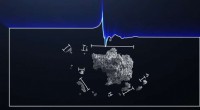
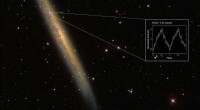
After a nova eruption, the white dwarf will begin to cool and fade in brightness. The ejected material from the eruption will form a shell of gas and dust around the star. This shell will eventually dissipate, and the white dwarf will return to its original state.
In some cases, a nova eruption may cause the white dwarf to become a Type Ia supernova. This occurs when the white dwarf's mass exceeds the Chandrasekhar limit, which is about 1.4 solar masses. When this happens, the white dwarf will undergo a complete thermonuclear explosion, completely destroying the star.
Nova eruptions are relatively common, with several occurring in our galaxy each year. They are important for understanding the evolution of stars and the recycling of matter in the galaxy.