Education and Early Interests:
- Hubble was born in Marshfield, Missouri, in 1889. He showed early aptitude in mathematics and science during his high school years.
- He attended the University of Chicago, where he initially majored in law to please his father, but he soon switched to physics and astronomy.
- Hubble's undergraduate studies allowed him to work with renowned astronomers like Robert Frost and George Ellery Hale, which sparked his interest in observational astronomy.
Military Service and World War I:
- After completing his undergraduate studies in 1910, Hubble was hired as a lawyer but quickly realized that law was not his true passion.
- In 1917, the United States entered World War I, and Hubble joined the U.S. Army, serving in the infantry and later in intelligence and ballistics.
- His experience in the military introduced him to the field of ballistics, which involved calculating the trajectories of projectiles. This experience would later be valuable in his astronomical observations.
Mentorship from George Ellery Hale:
- After the war, Hubble resumed his studies at the University of Chicago and completed his Ph.D. in astronomy under the guidance of renowned astronomer George Ellery Hale.
- Hale was the director of the Mount Wilson Observatory in California and invited Hubble to join the observatory's staff in 1919.
- Hale recognized Hubble's talent and provided him with opportunities to use the powerful telescopes of Mount Wilson, which were crucial for his later discoveries.
Observational Work at Mount Wilson:
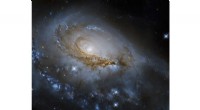
- At Mount Wilson Observatory, Hubble began his observational work, focusing on the distribution and classification of nebulae (now known as galaxies).
- Using the observatory's 100-inch Hooker telescope, Hubble obtained high-resolution images of galaxies and made important observations that would lead to his revolutionary discoveries.
The Discovery of the Expanding Universe:
- In 1923, Hubble published his observations, which showed that the universe is expanding. He discovered a relationship between the distance of galaxies and their redshift, known as Hubble's Law.
- Hubble's Law changed our understanding of the universe's structure and evolution and led to the development of the Big Bang theory.
- Hubble's work revolutionized the field of observational cosmology and earned him international recognition as one of the most significant astronomers of the 20th century.
Throughout his career, Hubble's dedication to observational astronomy and his groundbreaking discoveries reshaped our understanding of the universe and paved the way for modern cosmology. His contributions continue to inspire astronomers and researchers to explore the vastness and complexity of the cosmos.