To overcome this challenge, you need to use a telescope with a large aperture, which allows more light to be gathered and concentrated on the object you're observing. Additionally, using a high-quality eyepiece with good contrast and resolution can help improve the visibility of celestial objects during the day.
Some objects that you can observe during the day include the Moon, Venus, and Jupiter. The Moon is often visible even during the day, and its surface features can be observed in great detail with a telescope. Venus and Jupiter are also bright enough to be seen during the day, and they can appear as bright, star-like objects in the sky.
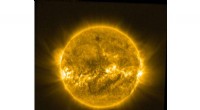
It's important to note that observing celestial objects during the day requires careful planning and patience. You should choose a location with a clear sky and minimal light pollution, and you may need to adjust the focus of your telescope several times to get a clear view. Additionally, using a solar filter is essential when observing the Sun during the day to avoid damaging your eyes.