Home
Chemistry
Astronomy
Energy
Nature
Biology
Physics
Electronics
Science
>>
Science Discoveries
> >>
Astronomy
Mars' Position Relative to Earth: Left or Right?
Neither. Mars orbits the sun, meaning sometimes it may be on the left and sometimes on the right of the Earth.
Reflectance Curves: Applications in Scientific Research
Mercury Thermometers: Why They Measure a Wide Temperature Range
Astronomy
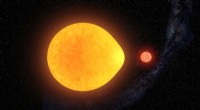
First Ever One‑Sided Pulsating Star Discovered in the Milky Way
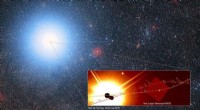
2028 Gravitational Lens Event in Alpha Centauri A Offers Rare Planet‑Hunting Window
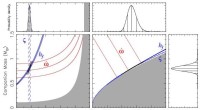
Precise Mass Estimates of Two Binary Pulsars Unveil Their Evolutionary Secrets
Science Discoveries
Gene Drives Target Malaria Mosquitoes, Yet Resistance Threatens Success
Tree Ring Analysis: A Powerful Tool Against Wood Smuggling
IPCC Urges Immediate Action: This Decade Is Key to Adapt to Climate Change and Rising Costs
Science Discoveries
Chemistry
Astronomy
Energy
Nature
Biology
Physics
Electronics
Geology
Solar Eclipse
Math
other
Nanotechnology
Astronomy
Arecibo Observatory’s Radio Telescope Collapses Amid Ongoing Damage
Using Earth Climate Models to Envision Life on Exoplanets
Black Hole Imaging Compared to Listening to a Piano, Says Scientist
Essential Guide to Observing a Total Solar Eclipse: Key Highlights & Tips
Hubble Captures the Hypergiant Home of Westerlund 1
Groundbreaking Imaging Reveals the Life Cycle of a Rare Mars Meteorite
|
Geology
|
Math
|
Solar Eclipse
Science Discoveries © www.scienceaq.com