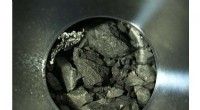
1) Identifying and classifying materials: Reflectance curves can be used to identify and classify materials based on their unique spectral properties. For example, different minerals have distinct reflectance curves that can be used to identify them in rock samples.
2) Studying the composition and properties of materials: Reflectance curves can provide information about the composition and properties of materials, such as their chemical composition, crystal structure, and grain size. This information can be useful for understanding the formation and history of rocks and minerals, as well as for developing new materials with specific properties.
3) Remote sensing of Earth's surface: Reflectance curves are used in remote sensing to collect data about Earth's surface from satellites and other airborne platforms. This data can be used to create maps of land cover, vegetation, soil moisture, and other surface features.
4) Studying the atmospheres of planets and moons: Reflectance curves are used to study the atmospheres of planets and moons by analyzing the light that is reflected from their surfaces. This information can provide insights into the composition and temperature of planetary atmospheres, as well as the presence of clouds, dust, and other particles.
5) Detecting and monitoring environmental changes: Reflectance curves can be used to detect and monitor changes in the environment, such as deforestation, urban expansion, and pollution. This information can be useful for developing policies and strategies to protect and manage natural resources.
Overall, reflectance curves are a valuable tool for scientists in a wide range of fields, providing insights into the composition, properties, and behavior of materials and surfaces.