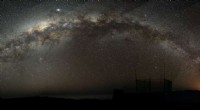
Optical surveys: Optical surveys use telescopes to scan the sky for objects that appear to be moving or changing in brightness. Any objects that are detected can be further investigated to see if they are natural phenomena or possible alien probes.
Infrared surveys: Infrared surveys use telescopes to detect objects that emit infrared radiation. This radiation can be emitted by stars, planets, and other objects, so it can be difficult to distinguish between natural objects and alien probes. However, infrared surveys can be used to detect objects that are hidden from view by clouds or dust.
Radio surveys: Radio surveys use telescopes to detect objects that emit radio waves. This radiation can be emitted by stars, planets, and other objects, so it can be difficult to distinguish between natural objects and alien probes. However, radio surveys can be used to detect objects that are located far away from Earth.
Gravitational microlensing surveys: Gravitational microlensing surveys use telescopes to detect the effects of gravitational microlensing. This occurs when the gravity of a massive object, such as a star or planet, bends the light from a background object. If a massive object, such as an alien probe, passes in front of a background star or galaxy, it will cause the star or galaxy to appear to brighten. This can be detected by telescopes on Earth.
SETI (Search for Extraterrestrial Intelligence) surveys: SETI surveys use radio telescopes to search for signals from alien civilizations. These signals could be in the form of radio waves, laser pulses, or other forms of communication. SETI surveys have been ongoing for many years, but no confirmed signals from alien civilizations have been detected yet.
By using these methods, astronomers are able to search the sky for alien probes near Earth. Although no confirmed alien probes have been detected yet, these surveys are helping us to learn more about the universe and the potential for life beyond Earth.