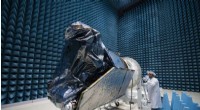
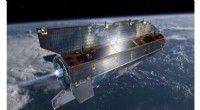
One of the most important tools for studying satellite galaxies is the Gaia satellite, which is a space telescope launched by the European Space Agency (ESA) in 2013. Gaia is designed to create a precise three-dimensional map of the Milky Way, including the positions, distances, and motions of stars and other objects in our galaxy.
The Gaia mission has already revolutionised our understanding of the Milky Way, and it has also revealed a number of interesting things about our satellite galaxies. For example, Gaia has revealed that the Milky Way has more satellite galaxies than previously thought, and that these galaxies are more diverse in terms of their size, shape, and composition. Gaia has also allowed us to measure the distances to satellite galaxies more precisely, which has provided new insights into the structure of the Milky Way and its surroundings.
One of the most important discoveries made by Gaia is the presence of a population of very faint satellite galaxies that are located far from the Milky Way. These galaxies are so faint that they were not detected by previous surveys, and they are thought to be the remnants of the earliest galaxies that formed in the Universe. The discovery of these faint satellite galaxies is significant because it provides new insights into the early stages of galaxy formation and evolution.
Gaia has also revealed that the Milky Way is not the only galaxy that is surrounded by satellite galaxies. In fact, almost all large galaxies in the Universe are thought to have satellite galaxies, and the properties of these satellite galaxies can vary significantly from galaxy to galaxy. The study of satellite galaxies is therefore an important area of research, and it can provide valuable insights into the formation and evolution of galaxies.
The Gaia mission is still ongoing, and it is continuing to collect data that is revealing new information about the Milky Way and its satellite galaxies. As the mission continues, we can expect to learn even more about these intriguing objects and their role in the Universe.