Here's a breakdown of the Hubble sequence and how galaxies came to be:
1. Elliptical Galaxies:
- Shape: Elliptical galaxies are round or oval-shaped, with a smooth and featureless appearance.
- Formation: Elliptical galaxies are believed to be the oldest and most massive galaxies in the universe. They are thought to have formed early in the universe's history through the merger and collision of smaller galaxies. These mergers caused the galaxies to lose their spiral structure and become more concentrated in their cores.
2. Lenticular Galaxies:
- Shape: Lenticular galaxies are intermediate in shape between elliptical and spiral galaxies. They have a round or oval central bulge, similar to elliptical galaxies, but also display faint hints of spiral structure or a disk.
- Formation: Lenticular galaxies are thought to form through the transformation of spiral galaxies. Over time, the spiral arms of a galaxy can become less prominent due to gravitational interactions, mergers, and other processes, resulting in a more elliptical appearance.
3. Spiral Galaxies:
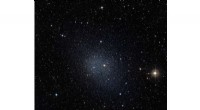
- Shape: Spiral galaxies are characterized by a central bulge surrounded by distinct spiral arms that extend outward. The spiral arms are bright and contain young stars, gas, and dust.
- Formation: Spiral galaxies are the most common type of galaxy in the universe and are believed to form from the collapse of rotating gas clouds. The central bulge is thought to form first, followed by the development of the spiral arms due to gravitational instabilities within the rotating gas disk.
The Hubble sequence provides a framework for understanding the diversity and evolution of galaxies. By studying the morphological features and properties of galaxies across the sequence, astronomers can gain insights into the processes that shape their formation, structure, and dynamics over cosmic time.