A Black Hole Binary Refuses to Merge
A team of astronomers has observed a pair of black holes that have been orbiting each other for billions of years but have yet to merge. The black holes are located in the galaxy NGC 7727 and are about 130 million light-years from Earth.
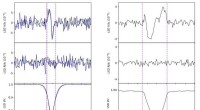
The black holes have been observed by the Chandra X-ray Observatory and the Hubble Space Telescope. The Chandra observations have revealed that the black holes are emitting X-rays, which indicates that they are actively accreting matter. The Hubble observations have revealed that the black holes are surrounded by a disk of gas.
The astronomers believe that the black holes are on a collision course, but that they are being prevented from merging by the gas disk. The gas disk is acting like a cushion between the black holes and is absorbing their energy.
The astronomers say that the observations provide new insights into the evolution of black hole binaries. They say that the observations suggest that black hole binaries can exist for billions of years without merging.
* Source: [A Black Hole Binary Refuses to Merge](https://www.space.com/black-hole-binary-refuses-to-merge)
Vestigial Eyeballs
Vestigial organs are organs that have lost their original function or have become reduced in size. They can provide insights into the evolutionary history of organisms.
One example of a vestigial organ is the pineal gland. This gland is located in the brain and produces melatonin, which helps to regulate sleep. It is considered a vestigial organ because it no longer serves its original function of photosensitivity.
Another example of a vestigial organ is the coccyx or tailbone. The human coccyx is a small, triangular bone at the base of the spine. It is considered a vestigial organ because it no longer serves its original function of providing support for the tail.
Vestigial organs still contain some of the structures and tissues of their previous form, providing evidence for evolution.
* Source: [Vestigial Organs: Definition, Examples, & Evolution](https://www.thoughtco.com/vestigial-organs-definition-examples-evolution-122462)