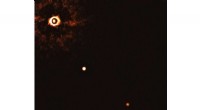
Kepler spent four years staring at a small patch of sky in the constellation Cygnus, monitoring over 150,000 stars. During that time, it detected a total of 2,662 exoplanets, including hundreds of Earth-size planets in the habitable zone of their stars, where liquid water could exist on the surface.
Kepler's discoveries have had a profound impact on our understanding of the universe. They have shown that exoplanets are common, and that many of them are potentially habitable. This has led to a renewed interest in finding life beyond Earth, and has inspired scientists to develop new technologies for detecting exoplanets.
Kepler's mission came to an end in 2013 when it ran out of fuel. However, its legacy will continue for many years to come. The data collected by Kepler is still being analyzed by scientists, and it is expected to yield even more discoveries in the future.
Kepler has changed the way astronomers study distant stars, and it has opened up a new window on the universe. Thanks to Kepler, we now know that there are billions of planets out there, and that some of them might just be home to life.
Here are some of the key findings from the Kepler Mission:
* Exoplanets are common. Kepler has shown that there are at least as many exoplanets as there are stars in our galaxy.
* Earth-size planets are common. Kepler has detected hundreds of Earth-size planets, including many in the habitable zone of their stars.
* Transiting planets are common. Kepler has shown that transiting planets are relatively common, making them easier to detect.
* Planetary systems are diverse. Kepler has found that planetary systems come in all shapes and sizes, with some systems having multiple planets and others having none.
Kepler has revolutionized our understanding of the universe and has opened up a new window on the search for life beyond Earth. Thanks to Kepler, we know that there are billions of planets out there, and that some of them might just be home to life.