1. Data Analysis and Interpretation:
AI algorithms can process and analyze vast amounts of data collected from telescopes, satellites, and other scientific instruments. By sifting through and interpreting complex datasets, AI can help astronomers identify patterns, anomalies, and hidden insights that may have been overlooked by human observation alone.
2. Virtual Universe Simulations:
AI can be used to create detailed simulations of the universe, modeling the behavior and interactions of galaxies, stars, and other cosmic structures. These simulations allow scientists to test theories, study the evolution of the universe, and investigate phenomena that are difficult or impossible to observe directly.
3. Classification and Identification:
AI algorithms can be trained to recognize and classify objects in space. For instance, they can help identify distant galaxies, detect exoplanets, or classify celestial objects based on their characteristics, aiding astronomers in their exploration and understanding of the cosmos.
4. Image Processing and Enhancement:
AI techniques can enhance the quality of astronomical images, remove noise and distortions, and extract detailed information from blurry or incomplete data. This can improve our ability to study distant objects and phenomena, and lead to new discoveries.
5. Pattern Recognition and Anomaly Detection:
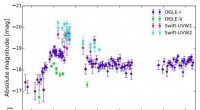
AI algorithms excel at identifying patterns and deviations from expected norms. By analyzing large datasets, AI can detect anomalies such as supernovae, transient events, or gravitational wave signals, prompting further investigation and potentially leading to new astrophysical discoveries.
6. Automated Exploration and Decision-Making:
AI-powered spacecraft and rovers can be equipped with autonomous decision-making capabilities, enabling them to explore space more efficiently. They can decide on the best paths to take, select interesting locations for observation, and transmit only the most valuable data back to Earth.
7. Big Data Analysis and Machine Learning:
With the continuous influx of data from space missions and telescopes, AI plays a crucial role in processing and extracting insights from these vast datasets. Machine learning algorithms can detect subtle relationships, learn from patterns, and make predictions, helping astronomers understand the universe's behavior and evolution.
8. Natural Language Processing:
AI can analyze scientific literature, research papers, and observational reports, extracting knowledge and insights from vast amounts of textual information. This supports researchers in staying updated with the latest findings and building a comprehensive understanding of various aspects of the universe.
9. Generative Models:
AI techniques, such as generative adversarial networks (GANs), can be used to generate realistic simulations of space phenomena. These models can help astronomers visualize and study hypothetical scenarios or recreate cosmic events that are difficult to observe directly.
By harnessing the power of AI, scientists can improve their ability to explore, analyze, and understand the vastness and complexity of the universe. AI serves as a powerful tool that complements and enhances human capabilities, accelerating our quest for knowledge and pushing the boundaries of our understanding of the cosmos.