To overcome this challenge, astronomers employ various techniques and instruments, such as:
Imaging Techniques:
Direct Imaging: This method aims to capture the faint light emitted or reflected by the planet itself, separate from the host star's brightness. However, the extreme contrast between the star's luminosity and the planet's faintness presents a significant technical hurdle.
Coronagraphy: To enhance direct imaging capabilities, coronagraphy uses specially designed masks or instruments to block out the intense light from the host star. This allows the planetary light to become visible.
Transit Photometry
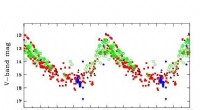
Transit Method: This technique relies on the slight dimming of the host star's light when the planet passes in front of it, as seen from our perspective. Measuring the dips in brightness with high precision allows astronomer to infer the planet's size, orbital period, and presence.
Microlensing
Gravitational Microlensing: This method involves observing the host star's magnification caused by the gravitational field of the planet. As the planet passes in front of a background star, its gravity distorts the light from the background star, which astronomer detect to infer the presence and properties of the planet.
Radial Velocity Method
Doppler Spectroscopy: This technique measures the slight wobbling motion caused by the planet tugging on the host star as they orbit around their center of mass. By analyzing the star's radial velocity variations, astronomers can derive the mass of the planet.
Astrometry
Precision measurements of the host star's position on the sky can reveal tiny shifts due to the planet's gravitational influence. This approach is challenging due to its high precision requirement.
Space Telescopes:
To eliminate the distorting effects of the Earth's atmosphere, space telescopes are essential for studying exoplanets with precision. The Hubble Space Telescope has made substantial contributions to exoplanet research, along with missions like the Kepler Space Telescope and the upcoming James Webb Space Telescope.
Characterizing Exoplanets:
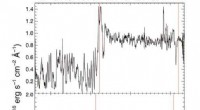
Once a potential exoplanet is identified, further techniques are employed to gain insights into its characteristics. These may include spectroscopy to study the planet's atmosphere, transit spectroscopy to determine its composition, and monitoring of the planet's light curves for sign of variability that might indicate the presence of moons or rings.
The combination of these techniques and advancements in instrument sensitivity has significantly expanded the number of known exoplanets and has brought some discoveries closer to our dreams of finding Earth-like worlds beyond our own solar system.