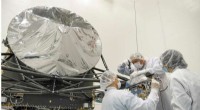
Starshade: A starshade is a physical object, usually a disk or a set of petals, that is positioned between the telescope and the star. It blocks out the light from the star, allowing the telescope to focus on the exoplanet. The starshade must be extremely precise in size and shape to effectively block the starlight without blocking out the light from the exoplanet.
Occulter: An occulter is a device that is placed in front of the telescope to block out the light from the star. Occulters can be made from a variety of materials, such as metal or glass, and can be designed to block out specific wavelengths of light.
Coronagraph: A coronagraph is a device that is used to block out the bright light from a star while allowing the telescope to detect the faint light from an exoplanet. Coronagraphs use a variety of techniques, such as apodization and phase-shifting, to suppress the starlight.
Lyot stop: A Lyot stop is a type of aperture stop that is used in telescopes to block out light from a star. Lyot stops are typically placed at the focal plane of the telescope, where the light from the star is focused to a point.
Focal plane mask: A focal plane mask is a device that is placed at the focal plane of the telescope to block out light from a star. Focal plane masks are typically made from a material such as metal or glass, and can be designed to block out specific wavelengths of light.
Polarimetry: Polarimetry is a technique that can be used to suppress the light from a star. Polarimetry involves measuring the polarization of the light from the star and then using a polarizing filter to block out the light that is polarized in the same direction as the starlight.
Adaptive optics: Adaptive optics is a technique that can be used to correct for the distortions caused by the Earth's atmosphere. Adaptive optics systems use a deformable mirror to compensate for the distortions, allowing the telescope to produce sharper images of exoplanets.
These are just a few of the methods that can be used to suppress light from a star that is ten billion times brighter than its habitable exoplanet. The specific technique or combination of techniques that is used will depend on the specific characteristics of the star and the exoplanet.