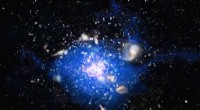
However, astronomers have recently made a breakthrough in our understanding of black holes. They have discovered that it is possible to feed a black hole by using a process called "accretion." Accretion occurs when matter falls into a black hole from its surroundings. This matter can come from a variety of sources, such as stars, gas clouds, and even other black holes.
As the matter falls into the black hole, it spirals inwards and accelerates under the influence of the black hole's gravity. The friction between the particles of matter generates heat, which causes the matter to glow brightly. This glowing region is called an accretion disk.
The accretion disk is a very dynamic environment. The matter in the disk is constantly heated and cooled, and it can become very turbulent. This turbulence can lead to the formation of jets of plasma that are ejected from the black hole at speeds close to the speed of light.
The discovery of accretion has allowed astronomers to learn a great deal about black holes. For example, we now know that black holes can grow in size by accreting matter from their surroundings. We also know that accretion can power some of the brightest objects in the universe, such as active galactic nuclei and quasars.
The study of accretion is still in its early stages, but it is already providing us with a new understanding of black holes and their role in the universe.