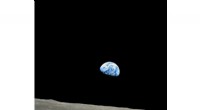
Because the Moon is tidally locked with Earth, the same side always faces towards Earth, while the far side is permanently turned away. The far side of the Moon is relatively unexplored compared to the near side, which is why it remains a source of mystery and fascination in the fields of space exploration and astrophysics.
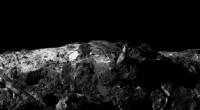
Unlike the near side, which is predominantly flat with large, dark, basaltic plains known as maria, the far side of the Moon is characterized by rugged, mountainous terrain and extensive craters. The largest crater on the Moon, the South Pole-Aitken basin, is located on the far side. This immense impact crater measures over 2,500 kilometers in diameter and is estimated to be about 4 billion years old.
Studying the far side of the Moon has provided valuable insights into its geological history and the impacts it has experienced over time. It has also facilitated the discovery of various scientific phenomena and unique lunar features that are not present on the near side, such as mascons (mass concentrations) that influence the Moon's gravitational field.
In recent decades, space missions and spacecraft have been instrumental in providing more detailed images and data about the far side of the Moon, and some countries have missions planned to further explore this region. These missions aim to enhance our understanding of lunar geology, composition, and the overall evolution of the Moon and its relationship to Earth.